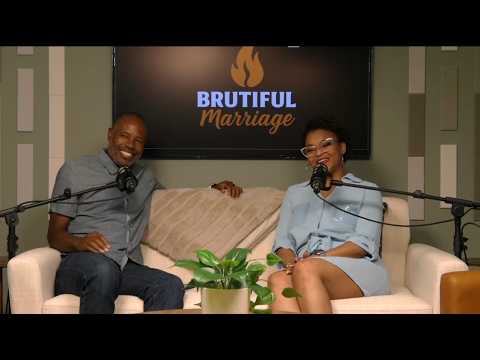
Eps. 25: Breaking chains - Part 2 ⛓️💥
How do childhood patterns and emotional wounds shape how you show up as a partner and a parent?
In this follow-up episode of Brutiful Marriage, we continue our discussion on breaking generational cycles and unpack what we learned from reading Adult Children of Emotionally Immature Parents. We share candid lessons about recognizing anxious vs. avoidant attachment styles, understanding why certain relationship triggers run so deep, and extending grace to our parents for what they couldn't give.
Plus, we explore how healing our own past has transformed the way we communicate with each other and parent our children intentionally.
Key topics covered:
Navigating anxious and avoidant dynamics in marriage
Tracing emotional triggers back to childhood roots
Extending grace to our parents while breaking generational cycles
Intentional parenting: Giving our kids space to articulate feelings
How therapy and self-awareness continue to strengthen our marriage
Catch the full video above.
CONTINUE THE CONVERSATION
Brutiful Essentials Brief is your free, quick‑hit, four‑page guide that distills each episode into the core truth, the key shifts, and the simple steps couples can use right away.
Our Brutiful Marriage Podcast Companion Guide takes the most powerful themes, verbatims, and moments from our most popular episodes and turn them into practical, heart‑centered tools you can use together.
frequently asked questions
What does it mean to break generational cycles?
Breaking generational cycles means recognizing unhealthy patterns that were passed down to you and intentionally choosing a different path. That doesn't mean blaming your parents or pretending they did everything wrong. It means honestly acknowledging what helped, what hurt, and what needs to change for future generations. In Episode 25, Doc and Crystal discuss extending grace to previous generations while still taking responsibility for their own healing.
Can childhood experiences affect my marriage?
Absolutely. Many of the reactions, fears, coping mechanisms, communication habits, and expectations we carry into marriage were formed long before we met our spouse. In Episode 25, Doc and Crystal explain how understanding their childhood experiences helped them better understand each other and themselves. What looked like a marriage issue was often connected to experiences from much earlier in life.
What are attachment styles?
Attachment styles are patterns that influence how people connect, communicate, and respond within relationships. In the episode, Crystal identifies with an anxious attachment style, while Doc describes more avoidant tendencies. Their opposing responses created friction because when one person wanted immediate connection, the other often wanted space. Understanding attachment styles can help couples stop treating differences as character flaws and start understanding where those differences come from.
What is an anxious attachment style?
People with anxious attachment tendencies often seek reassurance, connection, and resolution when conflict occurs. When tension enters the relationship, their instinct is usually: "Let's talk about it now."
That desire isn't necessarily about control. It often comes from wanting security, clarity, and emotional closeness.
What is an avoidant attachment style?
People with avoidant attachment tendencies often need space and time to process difficult emotions. When conflict occurs, their instinct may be: "I need a minute."
To an anxious partner, that can feel like rejection. To an avoidant partner, it may feel like necessary breathing room. Neither response automatically makes someone wrong. The challenge is learning how to meet somewhere in the middle.
Why do couples get stuck in the same arguments?
Many recurring arguments are not about the topic being discussed. They are about deeper fears, needs, experiences, and emotional patterns that have never been fully addressed. Episode 25 emphasizes that understanding where your reactions come from can help break cycles that continue showing up in different forms again and again.
Can understanding my childhood help my marriage?
Yes. Understanding your childhood doesn't excuse unhealthy behavior. It helps explain it. When you understand why certain situations create strong emotional reactions, you become better equipped to respond thoughtfully rather than react automatically. Awareness is often the first step toward change.
How do I stop repeating unhealthy family patterns?
First, identify them. Then ask yourself:
What did I learn growing up?
What was healthy?
What was unhealthy?
What do I want to keep?
What needs to stop with me?
As Doc and Crystal explain, many habits continue simply because nobody stopped long enough to examine them. Real change starts with awareness and intentionality.
Can therapy help break generational cycles?
Absolutely. In Episode 25, Doc and Crystal discuss how therapy introduced them to concepts like attachment styles and helped them better understand some of their reactions and behaviors. Therapy doesn't change the past. It helps you understand how the past is affecting the present.
How do generational patterns affect parenting?
Whether we realize it or not, children often learn more from what they observe than what they are told. The episode highlights how becoming aware of their own emotional habits helped Doc and Crystal become more intentional parents. They learned that breaking cycles doesn't just improve marriages. It also influences the next generation.
Is gentle parenting the same as permissive parenting?
No. Gentle parenting focuses on teaching, guiding, and helping children understand emotions rather than relying entirely on fear, shame, or control. Episode 25 explores the importance of allowing children to have a voice, express emotions, and learn healthy emotional regulation while still maintaining appropriate boundaries. Children need both grace and structure.
Why is emotional awareness important?
You cannot heal what you refuse to recognize. Emotional awareness helps you identify:
What you're feeling
Why you're feeling it
What triggered it
How to respond appropriately
Without awareness, people often react on autopilot and wonder why the same problems keep repeating themselves.
Can I honor my parents while acknowledging unhealthy patterns?
Yes. This is one of the most important lessons from Episode 25. You can appreciate the sacrifices your parents made while also recognizing areas where they struggled. As Doc and Crystal explain, many parents wanted to give more than they were capable of giving because they were working with what they themselves had received. Understanding that reality often creates compassion alongside accountability. [
What is the biggest lesson from Episode 25?
The biggest lesson is that healing starts with understanding. Before you can break a cycle, you have to recognize it. Before you can change a behavior, you have to understand where it came from. Before you can parent differently, communicate differently, or love differently, you must become aware of the patterns that have been operating in the background of your life. The goal is not perfection. The goal is progress so the story changes with you instead of being repeated through you.
Why do broken cycles matter?
Because somebody has to decide the pattern stops here. Somebody has to choose healthier communication. Healthier conflict. Healthier parenting. Healthier emotional expression. Breaking a cycle isn't just about making your marriage better. It's about creating a healthier inheritance for the people who come after you.
FULL TRANSCRIPT
00:00 Hey y'all. Excuse me. My bad. Just go. Okay. Excuse me. [laughter] What's up? Okay. No, shut up. Okay. Okay. Last week. [laughter] So, last week we were talking about. breaking chains. Yes. and essentially. resetting the generational cycle or.
00:30 making sure that it doesn't continue. And what we were thinking about was. one of the books that we read is. called. adult children of emotionally immature. parents. F. first of all, there's not a shot. No shots. We ain't talking about nobody. mama. Nobody daddy. Not my mama. Not her. daddy. Not her mama. We're not doing. that. It's just. it's the name of the book. It's the name of the book and it is an. excellent read. It is an excellent read. and when it.
01:00 comes to breaking generational curses. and generational cycles, it really. taught us about our attachment styles. and the things that can get us going and. and on a rolling down the side of a. mountain real fast. Super fast. Yeah. So, like for example, I learned. that I have an anxious attachment style. and so when I feel like there's. friction between us, I'm like, "Baby,. let's talk about it." Like, I just. really want to Can we just. She was ready to go where I guess I.
01:30 was avoiding attack. What is it? Avoidant. Avoid it. So when she wanted to attach,. I would avoid. So you can only imagine. how much friction that caused. And it's a learned behavior. It's a. learned behavior for good or for bad. and so we had to learn how to. recognize [laughter] that in one another and extend each. other grace. Yeah. but even in that it taught us to.
02:00 extend our parents' grace. for the things that they wanted to give. us but could not give us cuz they didn't. have it to give. Exactly. Again, breaking chains. Yeah. Breaking break and change chains. And it's it was a really. powerful read. recommend it for anybody. who has lungs. if you are looking to. one, better understand, you know,. where your emotions come from and your. reactions, you know, like if there's.
02:30 just this one thing that always gets you. going with your spouse or if there's. always this one thing that gets you. going with a certain type of person,. usually it's deeply rooted and deeply. seated in you in you from your. childhood. Yeah. And it really the. book really helps with you identifying. that. but it also taught us a lot. about how to relate to each other. Yes. Yes. because. you tend to just think about yourself.
03:00 we're selfish human beings. Yes. And yes we are. The best intentions in the whole wide. world are made in hell. [laughter] Hell is hot. You know what? And I also I think that. it has helped us to try to be better. parents. Say more. Meaning that if we knew that we were. trying to well once we read the book. like we're trying to break generational. chains and where our habits came. from. it made us more aware of what our kids. may be picking up.
03:30 Oh absolutely. And so we are more. aware. of and very deliberate in how we are. saying certain things or allowing. them to express themselves more as. opposed to you know. just shutting it down. Just shutting it down and you know the. do as I say not as I do type you know. kids are supposed to be seen not heard. Yeah. Yeah. Yeah. Yeah. Stay out of grown folks business. Now. look you are supposed to stay out of. grown folks business [laughter] but. there's a way there's a way to make sure. that happens. And I just feel. like, you know,.
04:00 if some people might call what we. do soft or gentle parenting. well, yeah, but. but yeah, I don't know. [laughter] I. don't get it. But you know, we have to. allow our children to have a voice. they have to learn how to articulate. their feelings. They have to be able to. recognize their feelings. And in order. for them to do that in a healthy way, we. have to know how to do the same thing. Exactly. Because they learn from what.
04:30 they see us do, just like we learn from. watching our what our parents and our. loved ones did around us. So, it. it really helped us to be more mindful. of the way that we show up. Yeah. As parents and as spouses. Yeah. So, if you get a chance, you know,. it's a good read. It's a really good we. read and I would love to know again. what your thoughts are, you know, once. you read the book and see how it may. help you identify maybe some of your. habits. Yeah. And I'm g tell you right now, it's. not a short book. it's perfect for.
05:00 road trips. get it on Audible. Nobody's paying us for this. We just. want it to help somebody. because it. was that much of a blessing in our lives. and it came to us through therapy. The. gift that keeps giving. Keep giving. So yeah, it's been good. y'all. And if I look hot, I am y'all. I. just came from working out and I'm about. to milk. I had to say it. No, you didn't. I knew you was going to. break. Like, you're not that hot. I am hot,. girl. Bye. [laughter] We see y'all.
05:30 Bye.